Why Does Your Water Heater Suddenly Stop Working
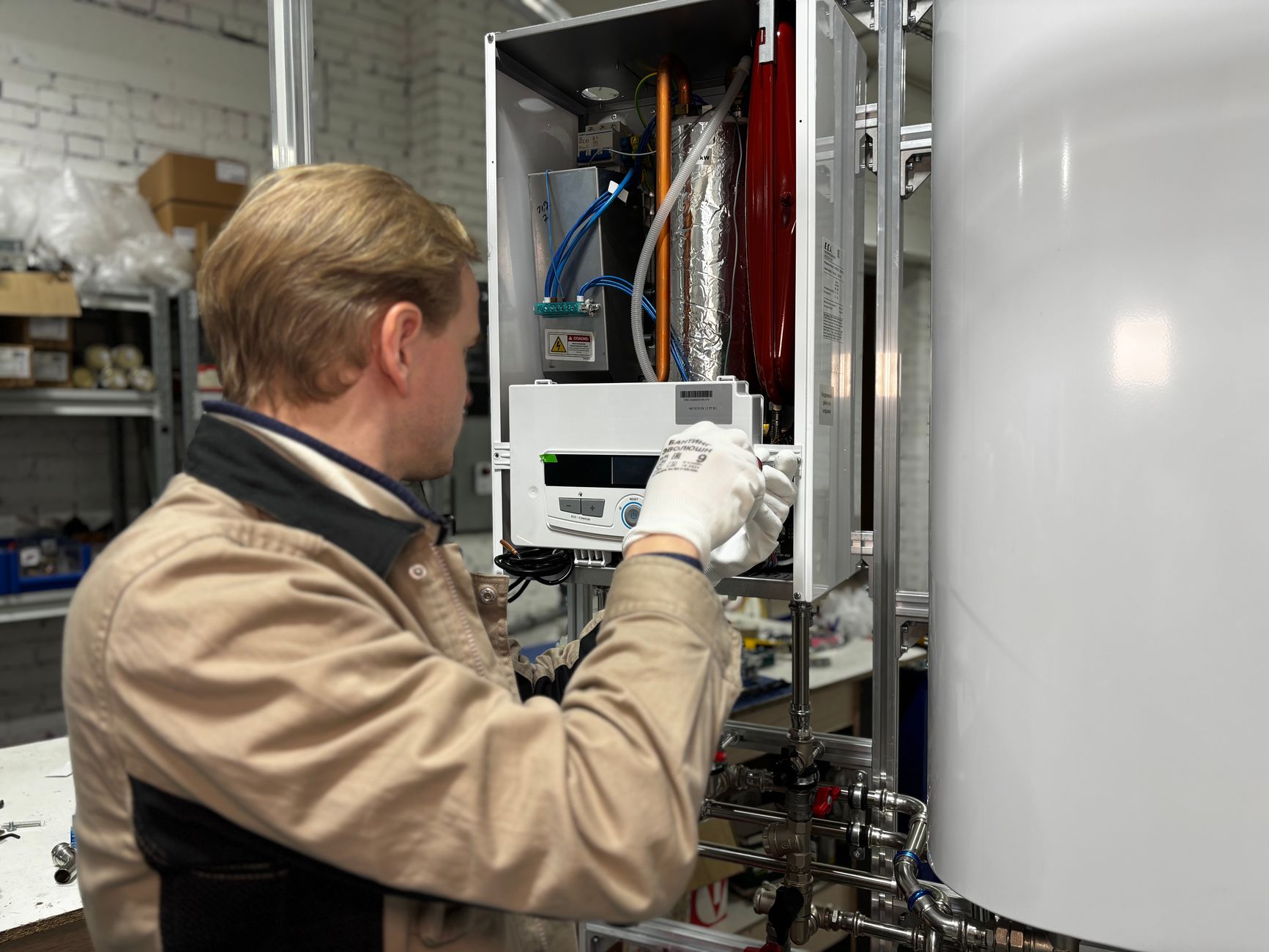
A water heater almost never dies without warning - it dies without obvious warning. In the vast majority of no-hot-water calls we run, the unit stopped because of one of seven failures: a tripped high-limit switch, a burned-out heating element, a failed thermocouple or igniter, a broken dip tube, sediment buildup, a gas supply interruption, or a leak that tripped the safety shutoff. The fix is usually a same-day repair, not a replacement tank.
Below we walk through each failure, how to tell them apart in about five minutes, what 2026 repair pricing looks like across the United States, and the point where you should stop troubleshooting and call us.
The Short Answer: Why Water Heaters Quit Without Warning
Water heater failure is sudden to you because the components that fail - thermocouples, elements, dip tubes, pressure switches - wear out silently over months and then cross a threshold in a single cycle. The tank itself rarely fails first. On a standard 40- or 50-gallon tank, the average service life runs 8 to 12 years, and roughly 70% of the no-hot-water calls we take are on units in that 7-to-13-year window.
An emergency water heater repair is the category of work that gets hot water back the same day - replacing a thermocouple, resetting a high-limit, swapping an element, or clearing a flame sensor. It is not the same as a tank replacement, and on most units it costs a fraction of what homeowners expect.
The 7 Most Common Reasons a Water Heater Stops Working
Here are the failures we see most often, ranked roughly by how frequently they show up on our dispatch board.
1. Tripped high-limit switch or ECO
The high-limit switch (sometimes called the ECO, or energy cut-off) is a safety device that kills power to the elements if the tank water exceeds about 180°F. It trips for a reason - a stuck thermostat, a failed element, or a brief power surge. Resetting it takes 30 seconds, but if it trips twice in a week, the underlying cause needs to be found. We see this constantly on electric tanks in older housing stock where the thermostat has drifted 15 to 20 degrees above setpoint.
2. Burned-out heating element
Electric water heaters have one or two screw-in elements. When one fails, you get lukewarm water or a tank that runs out in five minutes. When both fail, you get cold water only. A replacement element runs $15 to $40 in parts and about an hour of labor. We test elements with a multimeter for continuity before we touch anything else - it is the fastest diagnostic on an electric tank.
3. Failed thermocouple or igniter (gas units)
On a gas water heater, the thermocouple is a small rod that tells the gas valve a pilot flame is present. When it wears out, the pilot will not stay lit - you light it, it burns for 20 seconds, then goes out. Thermocouples cost under $20 and take about 45 minutes to replace. On newer units with electronic ignition, the equivalent failure is a dirty or cracked igniter, which throws a fault code on the control board.
4. Broken dip tube
The dip tube is a plastic pipe inside the tank that delivers cold water to the bottom. When it cracks - common on units manufactured between 1993 and 1997, and still seen on cheaper tanks today - cold water short-circuits to the hot outlet. The result is a tank that produces hot water for 30 seconds and then goes cold. You will also find white plastic fragments in your aerators. This one is a repair, not a replacement, but the tank has to be drained and the inlet nipple removed.
5. Sediment buildup
In areas with hard water - much of the Southwest, the Midwest, and Florida - calcium and magnesium settle to the bottom of the tank and bake into a crust. You hear popping, rumbling, or banging when the burner fires. That noise is steam trapped under the sediment. Left alone, sediment insulates the burner from the water, overheats the tank bottom, and shortens the tank's life by years. Annual flushing prevents it; once the popping starts, a professional flush and inspection is the right move.
6. Gas supply interruption or pilot outage
If your gas water heater stopped the same day your furnace or stove also stopped, the problem is upstream - a utility shutoff, a closed valve, or a regulator issue. If everything else in the house works, the pilot or ignition system is the likely culprit. We handle gas leak repair and gas-line diagnostics on the same visit, because a water heater that will not stay lit is sometimes a symptom of a small leak at a fitting.
7. Leak that tripped the safety shutoff
A puddle under the tank is the one failure you should never troubleshoot yourself. It can be a loose drain valve (a $12 part), a failed T&P relief valve, a leaking inlet fitting, or a cracked tank. On a tank that is 10 years or older, a leak at the base is almost always a failed tank - no repair will hold. We run leak detection and repair on every water heater call where moisture is present, because the leak source is not always where the water lands.
Gas vs. Electric: The Failure Modes Are Different
Gas and electric water heaters fail in different ways, and knowing which one you have cuts your diagnostic time in half.
- Electric: no hot water at all usually means a tripped high-limit or two dead elements. Lukewarm water usually means one dead element.
- Gas: no hot water with a cold tank usually means the pilot will not stay lit (thermocouple) or the igniter has failed. Popping sounds point to sediment.
- Tankless: error codes on the display, cold-water sandwiching (hot-cold-hot in the shower), or a unit that fires for 10 seconds and shuts off. Scale buildup on the heat exchanger is the number-one cause in hard-water regions.
If your unit is tankless and throwing a code, do not keep resetting it. Each reset cycle pushes more scale through the exchanger. Call it in.
What Does Water Heater Repair Cost in 2026?
Typical 2026 pricing across the United States breaks down like this. These are ranges, not quotes - your exact number depends on the unit, the part, and access.
- Thermocouple replacement (gas): $150-$280
- Heating element replacement (electric, one element): $180-$320
- High-limit / thermostat replacement: $200-$400
- Dip tube replacement: $250-$450
- Full tank flush and sediment removal: $150-$300
- T&P relief valve replacement: $180-$350
- New 40-50 gallon tank installed (if repair is not viable): $1,200-$2,400
Emergency rates after hours typically add $75 to $200 to the labor portion. A repair on a unit under 8 years old almost always beats replacement. On a unit over 12 years old with a leaking tank, replacement is the honest answer.
What to Watch Out For (Common Mistakes)
These are the mistakes we see homeowners make before we arrive - each one costs time or money.
- Resetting the high-limit repeatedly. If it trips twice, stop. The underlying fault will keep tripping it, and on some units you can damage the element.
- Relighting a gas pilot without checking for gas smell. If you smell gas, leave the house and call from outside. Do not light anything.
- Draining a tank without killing power or gas first. Dry-firing an electric element destroys it in under 10 seconds.
- Ignoring a small leak. A drip at the base of a 10-year-old tank is a warning, not a nuisance. It becomes a flooded floor at 2 a.m.
- Turning the thermostat above 140°F to "fix" lukewarm water. That is a scald hazard, especially with kids in the house. The real problem is a failed element or dip tube.
If your water heater shares a mechanical closet with a floor drain, keep the area clear. We respond to more water-damage calls from blocked closets than from actual tank failures.
When to Call a Professional
Call a licensed plumber the moment you see water on the floor, smell gas, hear the tank popping, or find the high-limit tripping more than once. Those four signs point to failures that get worse fast and can damage flooring, drywall, or the tank itself.
At Rapid Response Plumbing, we run same-day emergency plumbing service on water heaters, and we carry the common parts - thermocouples, elements, T&P valves, dip tubes - on every truck. We diagnose, quote the repair, and finish it on the same visit in most cases. If a repair is not the right call, we tell you that straight and walk you through replacement options.
We also handle the plumbing around the water heater when it fails. A burst supply line, a backed-up drain pan line, or a failed shutoff valve all get fixed on the same trip. If your water heater is in a basement that has ever flooded, it is worth having us look at the drain cleaning on the floor drain at the same time - a clogged drain turns a small leak into a big one.
Frequently Asked Questions
Why did my water heater stop working all of a sudden?
Nine times out of ten it is a single failed component: a thermocouple, a heating element, a tripped high-limit switch, or a broken dip tube. These parts wear out gradually and fail in one cycle, which is why the loss of hot water feels instant. A plumber can usually identify the cause in under 30 minutes.
Can I reset my water heater myself?
Yes, if it is an electric unit and you can find the red reset button on the upper thermostat - kill the breaker first, then press it. If it trips a second time within a week, stop resetting it and call a plumber. Repeated tripping means a thermostat or element fault that will not fix itself.
How long does a water heater last before it needs replacing?
A tank-style water heater lasts 8 to 12 years with annual flushing. Tankless units run 18 to 20 years with yearly descaling. If your tank is past 12 years and the repair quote is more than 40% of a new install, replacement is the better financial call.
Why is my water heater making a popping noise?
Popping or rumbling means sediment has built up on the tank bottom and steam is trapped under it. It is most common in hard-water areas. A professional flush removes the sediment. Left alone, it overheats the tank bottom and can cut years off the unit's life.
Is no hot water an emergency?
No hot water alone is urgent but not dangerous - same-day service is appropriate. It becomes a true emergency if you also see water pooling around the tank, smell gas, or hear the relief valve discharging. In those cases, shut off the gas or breaker and call immediately.
Get Help With Emergency Plumber in the United States
If your water heater quit and you need hot water back today, our team at Rapid Response Plumbing is on call across the United States. We diagnose the failure, quote the repair up front, and finish the job on the same visit whenever the parts allow.
Call (844) 924-8548 and we will get a licensed plumber headed your way.
Frequently asked questions
Why did my water heater stop working all of a sudden?
Nine times out of ten it is a single failed component: a thermocouple, a heating element, a tripped high-limit switch, or a broken dip tube. These parts wear out gradually and fail in one cycle, which is why the loss of hot water feels instant.
Can I reset my water heater myself?
Yes, if it is an electric unit and you can find the red reset button on the upper thermostat - kill the breaker first, then press it. If it trips a second time within a week, stop resetting it and call a plumber.
How long does a water heater last before it needs replacing?
A tank-style water heater lasts 8 to 12 years with annual flushing. Tankless units run 18 to 20 years with yearly descaling. If your tank is past 12 years and the repair quote is more than 40% of a new install, replacement is the better call.
Why is my water heater making a popping noise?
Popping or rumbling means sediment has built up on the tank bottom and steam is trapped under it. It is most common in hard-water areas. A professional flush removes the sediment and prevents long-term tank damage.
Is no hot water an emergency?
No hot water alone is urgent but not dangerous - same-day service is appropriate. It becomes a true emergency if you also see water pooling around the tank, smell gas, or hear the relief valve discharging.