What Causes Hot Water to Suddenly Disappear
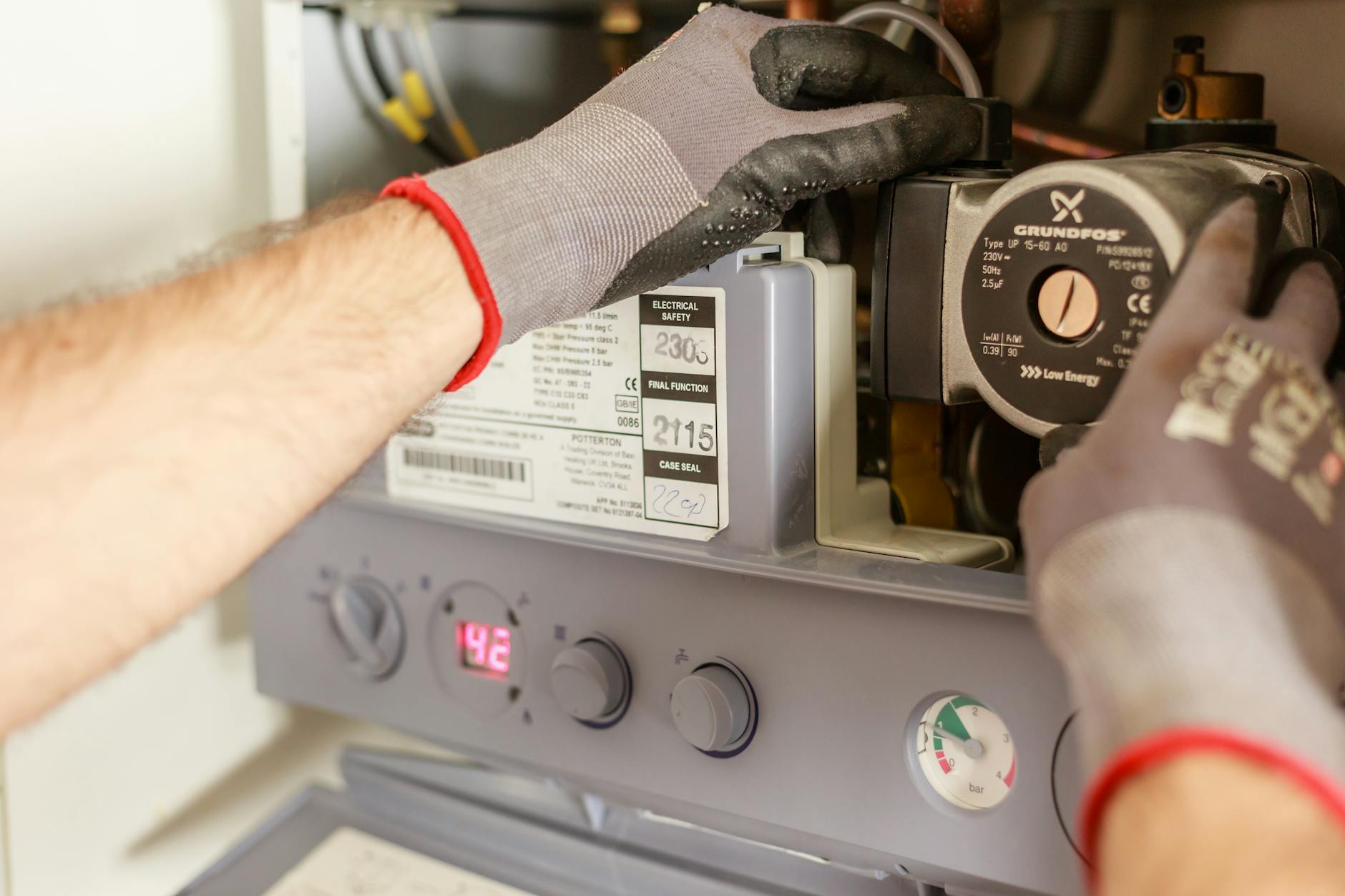
Hot water disappears for one of five reasons: a failed heating element, a broken dip tube, a dead gas pilot or igniter, a tripped high-limit switch, or sediment that has choked the tank. On a tankless unit, the cause is almost always a clogged inlet filter, a scaled heat exchanger, or a flow rate that's too low to trigger the burner. Either way, the fix is mechanical - not mysterious.
We run these calls every week across the United States, and the diagnosis usually takes under 20 minutes. Below we walk through each cause, how to tell them apart in your own basement or utility closet, and the point where you should stop troubleshooting and call us.
The Short Answer: Why Hot Water Disappears
Hot water disappears when the heat source stops transferring energy to the water, or when cold water is allowed to mix into the hot side of the tank. Those are the only two mechanisms. Everything else is a variation.
If your water is warm but never hot, the heat source is weak - a partially failed element or a burner running at half capacity. If the water is stone cold from the first second, the heat source is off entirely. If it starts hot and goes cold in 90 seconds, you have a mixing problem, and the dip tube is the first suspect.
That distinction matters because it tells you what to check before you spend a dollar. A plumber who knows the symptom pattern walks in with the right part on the truck.
Why Does My Hot Water Run Out So Fast?
Hot water runs out fast when cold water is entering the top of the tank instead of the bottom, which is the classic signature of a broken dip tube. The dip tube is a plastic pipe inside the cold-water inlet. Its job is to deliver incoming cold water to the bottom of the tank, where the heating element or burner sits, so the hot water at the top stays stratified and ready.
When that tube cracks or snaps off - common in tanks built before 1997, when manufacturers used a polypropylene blend that degraded in chlorinated water - cold water dumps straight into the top of the tank. You get 30 to 60 seconds of hot water, then a rapid slide to lukewarm, then cold.
Three other things cause fast depletion:
- Sediment buildup. In hard-water states like Texas, Arizona, and Florida, a tank can accumulate 2 to 4 inches of calcium carbonate on the bottom in five years. That layer insulates the burner from the water and shrinks your usable hot-water capacity by 20 to 40 percent.
- A failed lower heating element. On a 240-volt electric tank, the lower element does most of the recovery work. When it burns out, the upper element alone can't keep up with a 10-minute shower.
- A tank that's simply undersized. A 40-gallon tank serves a family of two. A family of four running two showers back-to-back needs 50 to 75 gallons, or a tankless unit sized to 8 to 10 gallons per minute.
If you're seeing water pooling near the base of the tank at the same time, that's a separate problem - our team handles leak detection and repair on the same visit so you're not paying two trip charges.
Tank vs. Tankless: Different Causes, Different Fixes
Tank and tankless water heaters fail in completely different ways, so the diagnosis starts with which one you own. A tankless unit has no stored hot water. It heats on demand, which means any drop in flow or any restriction in the heat exchanger kills your hot water instantly.
Tank water heater causes
- Burned-out heating element (electric) - usually the lower one, $150 to $300 to replace in 2026
- Failed thermocouple or pilot assembly (gas) - $120 to $250
- Broken dip tube - $150 to $350 including the part
- Tripped high-limit switch or a bad thermostat - $180 to $400
- Sediment layer requiring a full flush - $100 to $200
- Cracked tank - replacement only, $900 to $1,800 installed
Tankless water heater causes
- Clogged inlet water filter - clean or replace, $75 to $150
- Scaled heat exchanger - descaling runs $200 to $400
- Flow rate below the activation threshold (usually 0.5 to 0.75 GPM)
- Error code from a blocked exhaust or a failed flow sensor
- Gas supply issue on a high-BTU unit - needs 150,000 to 199,000 BTU/hr available
One pattern we see constantly: a homeowner installs a tankless unit to save space, then adds a low-flow showerhead, and the reduced flow drops below the activation threshold. The unit never fires. That's not a broken heater - it's a settings and sizing issue, and we fix it without replacing anything.
For gas units, if you smell rotten eggs near the heater or the gas line, stop and get out. That's a gas leak repair call, not a water heater call, and it needs a licensed technician on site the same day.
What Causes Hot Water to Disappear in Winter?
Hot water disappears more often in winter because incoming ground water is 20 to 30 degrees colder, so your heater works harder to raise it to 120°F. A tank that barely kept up in July will fall behind in January.
Three winter-specific triggers:
- Frozen pipes feeding the heater. If the cold-water line into the tank freezes, the tank can't refill and you'll drain it in one shower. This is common in unheated crawl spaces and garages from the upper Midwest through New England.
- Condensation on the flue. A gas water heater venting into a cold chimney can condense, drip back, and trip the safety switch.
- Longer showers. Households use 15 to 25 percent more hot water in winter. A tank that was marginal in October is now failing.
If a pipe has already split, that's a burst pipe repair job and it needs to happen before the thaw, not after. Water damage from a split line runs $3,000 to $8,000 on average once it reaches drywall and flooring.
We also see a spike in calls from older housing stock this time of year. Buildings from the 1920s through the 1960s often share undersized gas lines and original galvanized supply piping, and those two things together cause both pressure drops and heater shutdowns. If you're in a neighborhood full of pre-war housing, that context matters when we diagnose the problem.
Common Mistakes Homeowners Make
Homeowners make the same five mistakes when hot water disappears, and each one costs money or safety.
- Resetting the breaker without checking the element. If the lower element is shorted, the breaker will trip again within minutes. You've learned nothing and wasted an hour.
- Relighting a gas pilot repeatedly. If the pilot won't stay lit after two attempts, the thermocouple or the gas valve is the problem. Repeated relighting on a unit with a cracked heat exchanger can push carbon monoxide into the room.
- Turning the thermostat above 140°F to compensate. That's a scald risk, especially with kids in the house, and it accelerates sediment buildup. Keep it at 120°F.
- Ignoring a small drip at the tank base. A weeping tank is a tank that's about to fail. Once the steel is compromised, no repair holds.
- Flushing the tank without shutting off the power or gas. Dry-firing an electric element destroys it in under 10 seconds.
One more: assuming a tankless unit is maintenance-free. It isn't. Tankless heaters need descaling every 12 to 18 months in hard-water areas, and skipping that is the number one reason they stop producing hot water.
When to Call a Professional
Call a professional when the water is cold at every fixture, when you see water on the floor near the heater, when you smell gas, or when the breaker trips more than once. Those four symptoms cover 90 percent of the calls we run.
We handle the full range - element and thermocouple replacement, dip tube swaps, tank flushing, tankless descaling, and full heater replacement when the tank itself has failed. If your issue turns out to be a blocked line rather than the heater, we'll pivot to drain cleaning or a sewer repair service on the same visit. No second trip charge.
We quote the price before we start. You approve it, we do the work, and we test the hot water at every fixture before we leave. If the fix is a $180 thermocouple, that's what you pay - we don't upsell a replacement tank you don't need.
Rapid Response Plumbing is a state-licensed plumbing contractor serving homeowners across the United States. Our technicians carry the common elements, thermocouples, and dip tubes on the truck, so most no-hot-water calls are resolved in a single visit.
Frequently Asked Questions
Why did my hot water suddenly stop working?
Sudden loss of all hot water usually means a failed heating element, a dead pilot or igniter, or a tripped high-limit switch. On gas units, check the pilot first. On electric units, check the breaker. If both are fine, the element or thermostat has failed.
Can a water heater lose hot water and then get it back?
Yes. Intermittent hot water points to a failing lower element, a thermostat cycling incorrectly, or a dip tube that has partially broken. It won't fix itself - the part will fail completely within days to weeks.
How much does it cost to fix no hot water in 2026?
Typical 2026 pricing runs $120 to $250 for a thermocouple or pilot repair, $150 to $300 for a heating element, and $150 to $350 for a dip tube replacement. Full tank replacement runs $900 to $1,800 installed.
Is it worth repairing a 12-year-old water heater?
If the tank itself is sound, yes - a $200 element or thermocouple buys you more years. If the tank is leaking or rusted, replace it. Most tanks last 8 to 12 years, and a leaking tank cannot be repaired.
Why does my hot water only last a few minutes?
A broken dip tube is the most likely cause. It lets cold water enter the top of the tank and mix with the hot water, so your usable supply drops to under two minutes. A heavy sediment layer causes a similar symptom.
Get Help with Emergency Plumber in the United States
If your hot water is gone and you've checked the breaker and the pilot, the next step is a technician. We run same-day no-hot-water calls across the United States and carry the parts to fix most failures on the first visit.
Call Rapid Response Plumbing at (844) 924-8548 and we'll get your hot water back on today.
Frequently asked questions
Why did my hot water suddenly stop working?
Sudden loss of all hot water usually means a failed heating element, a dead pilot or igniter, or a tripped high-limit switch. Check the pilot on gas units and the breaker on electric units. If both are fine, the element or thermostat has failed.
Can a water heater lose hot water and then get it back?
Yes. Intermittent hot water points to a failing lower element, a thermostat cycling incorrectly, or a partially broken dip tube. It won't fix itself - the part typically fails completely within days to weeks.
How much does it cost to fix no hot water in 2026?
Typical 2026 pricing runs $120 to $250 for a thermocouple or pilot repair, $150 to $300 for a heating element, and $150 to $350 for a dip tube replacement. Full tank replacement runs $900 to $1,800 installed.
Is it worth repairing a 12-year-old water heater?
If the tank itself is sound, yes - a $200 element or thermocouple buys you more years. If the tank is leaking or rusted, replace it. Most tanks last 8 to 12 years, and a leaking tank cannot be repaired.
Why does my hot water only last a few minutes?
A broken dip tube is the most likely cause. It lets cold water enter the top of the tank and mix with the hot water, so your usable supply drops to under two minutes. A heavy sediment layer causes a similar symptom.